Washington Court Dismisses AimJunkies Countersuit Against Bungie in Destiny 2 Cheat Case
A Washington court dismissed AimJunkies' countersuit against Bungie, citing insufficient evidence in the Destiny 2 cheat lawsuit.
A Washington District Court has dismissed cheat provider AimJunkies’ countersuit against Destiny 2 maker Bungie, ruling that the company failed to provide sufficient evidence to support its claims. The decision marks another chapter in a legal battle that has become one of the most closely watched fights between a major game studio and cheat sellers. AimJunkies had argued that Bungie crossed legal lines while building its copyright infringement case, but the court found those accusations lacking.
At the center of the dispute was AimJunkies’ claim that Bungie posed as a customer to purchase AimJunkies cheats and then reverse-engineered the code to collect evidence for its own lawsuit. AimJunkies also accused Bungie of hacking its computer databases. Those claims formed the heart of the counterclaim, but Judge Thomas Zilly determined that the evidence simply was not there.
A Legal Fight with a Long Tail
Bungie’s campaign against Destiny 2 cheat makers has been aggressive. Earlier in the legal timeline, Bungie sued three cheat makers at once and settled with one of them for $13.5 million. AimJunkies, however, proved more resilient than other sites. It initially succeeded in getting Bungie’s first case dismissed, and when Bungie refiled, AimJunkies responded with its own counterclaims.
The legal arguments sit at the intersection of copyright law and software enforcement. Bungie argued that cheat software amounts to copyright infringement leading to loss of income. AimJunkies counterattacked by questioning the methods Bungie used to obtain proof. In many ways, the case reflects a broader industry struggle: game studios are increasingly turning to courts to deter cheat developers, while cheat providers are challenging those tactics by alleging that studios break their own rules to gather evidence.
Inside the Judge’s Ruling
Judge Thomas Zilly dismissed the countersuit, siding with Bungie’s motion to dismiss. In the ruling, the judge said AimJunkies failed to provide sufficient evidence to support violations of the DMCA leading to damages. He also noted there was no evidence to support the claim that Bungie illegally accessed AimJunkies’ computer files.
Although Bungie made a strong showing that the counterclaims should be dismissed with prejudice, Judge Zilly allowed AimJunkies to amend its countersuit and refile. The key condition was timing: AimJunkies had only until the November 21 deadline to submit a revised filing. That small window left the door open for another round of legal wrangling, but the court’s message was clear—unsubstantiated accusations would not be enough.
| Key Moment | Detail |
|---|---|
| Early legal action | Bungie sued three cheat makers at once and settled with one for $13.5 million |
| AimJunkies pushback | The cheat provider got Bungie’s initial case dismissed, then countersued after Bungie refiled |
| Court ruling | Judge Thomas Zilly dismissed the countersuit but allowed an amended filing before November 21 |
What the Decision Means
The ruling reinforces a broader legal strategy that combines copyright claims with technical evidence. For Bungie, the decision is a signal that internal investigations and evidence gathering can withstand scrutiny when counterclaims are not backed by specific facts. For cheat sellers, it is a reminder that challenging a major studio in court requires more than allegations—it requires proof.
The case also highlights the complexities of DMCA violations in gaming. Cheat software often operates in a legal gray area, and courts are still defining how far companies can go to protect their games. Judge Zilly’s ruling does not answer every question, but it does suggest that courts will not easily accept counterclaims built on speculation.
Destiny 2 Players Watch From the Sidelines
While the legal side remains complicated, Destiny 2 players have had their own share of recent surprises. Fans hoping that the Telesto event might have led to a hidden mission were slightly disappointed to learn that Telesto merely acted up for a little while, got a performance upgrade, and gave everyone a cool emblem. Those looking for a secret Whisper of the Worm-style mission were left empty-handed.
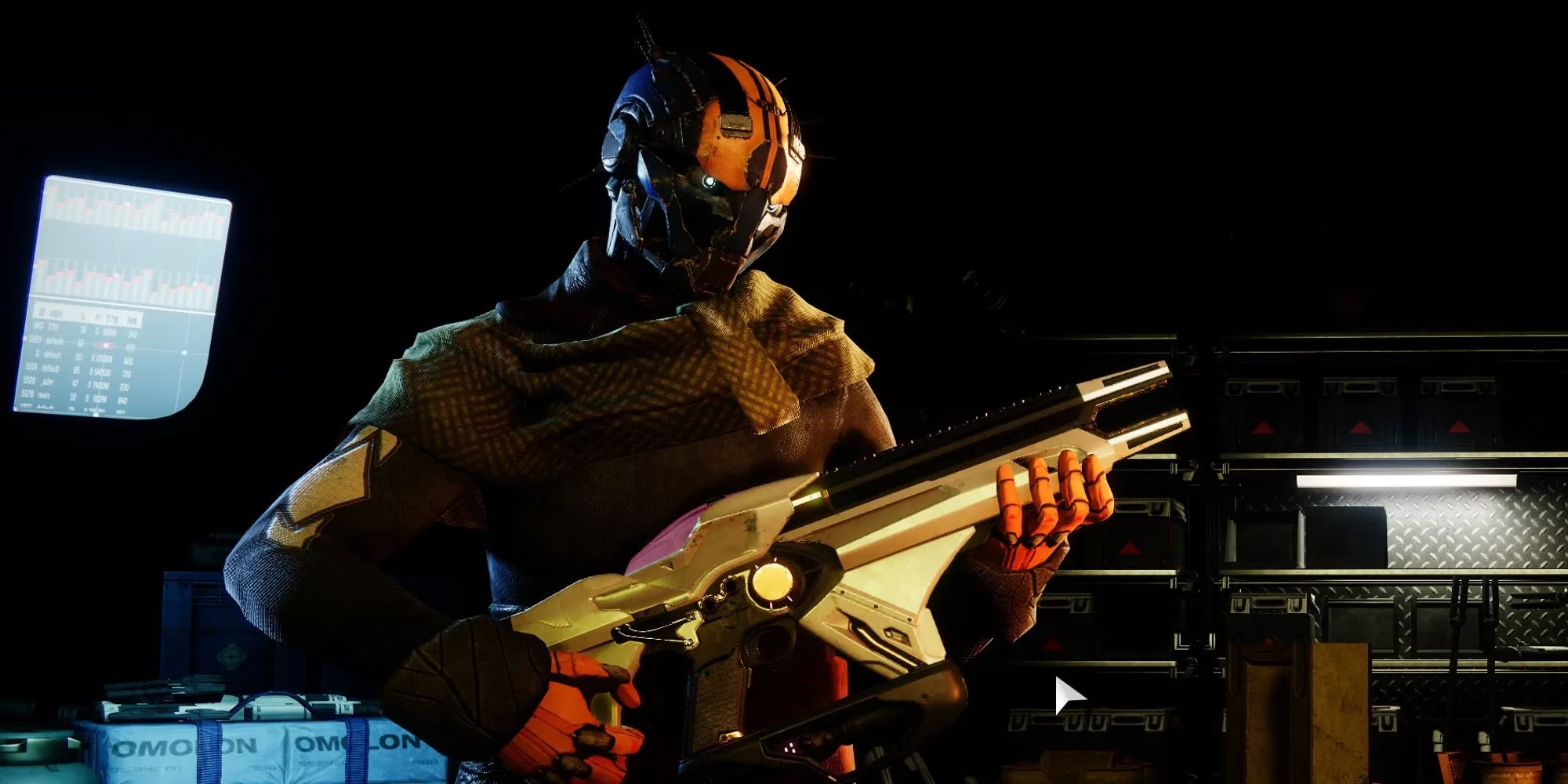
Bungie has made it clear that such surprise missions are unlikely to happen anytime in the near future. Still, the Telesto event proved that Bungie can surprise fans by working around the various dataminers constantly scouring for updates. That ability to keep secrets in an era of relentless data mining is something players have come to appreciate.
With the court’s decision now on record, all eyes remain on whether AimJunkies will file an amended complaint before the deadline. For Bungie, the ruling adds another win in its effort to protect Destiny 2 from cheats. For players, the ongoing saga is a reminder that the fight against unfair advantages is as active outside the game as it is inside.