Two Years On, Destiny 2's Lightfall Still Feels Like Bungie's Biggest Narrative Whiff
Destiny 2 Lightfall's narrative disconnect and garish Neomuna aesthetic sabotaged its mythos, creating jarring tonal whiplash.
It’s 2026, and even as Guardians pour into the latest seasonal content behind The Final Shape, the spectre of Lightfall still looms large. Bungie’s 2023 expansion was meant to be the ‘Infinity War’ moment for Destiny 2—the start of an all-out galactic conflict fans had been building towards for years. Instead, it landed with a thud so loud you could hear it from the Last City to Neomuna. While the game has clawed back goodwill with tighter storytelling and more respectful character arcs since then, Lightfall remains that awkward chapter everyone would rather skip, a masterclass in how to sabotage your own mythos.
The campaign’s opening cinematic was stellar, no doubt about it. Seeing The Witness’s fleet invade Earth, allies scrambling—it was the blockbuster hook the series deserved. But then the cracks appeared almost instantly. Players were whisked off to Neptune under the guise of a desperate counterstrike, only to be handed what amounted to a glorified Strand tutorial. Hours of chasing after ‘The Veil’ left many—including this writer—scratching their heads. What is the bloody thing? Why does it matter? The Witness used it to pop open the Traveler like a cosmic piñata and scarpered off with it, and yet the campaign never bothered to explain the stakes in a coherent way. It was a narrative mess, a parade of clumsy exposition wrapped in neon lights.
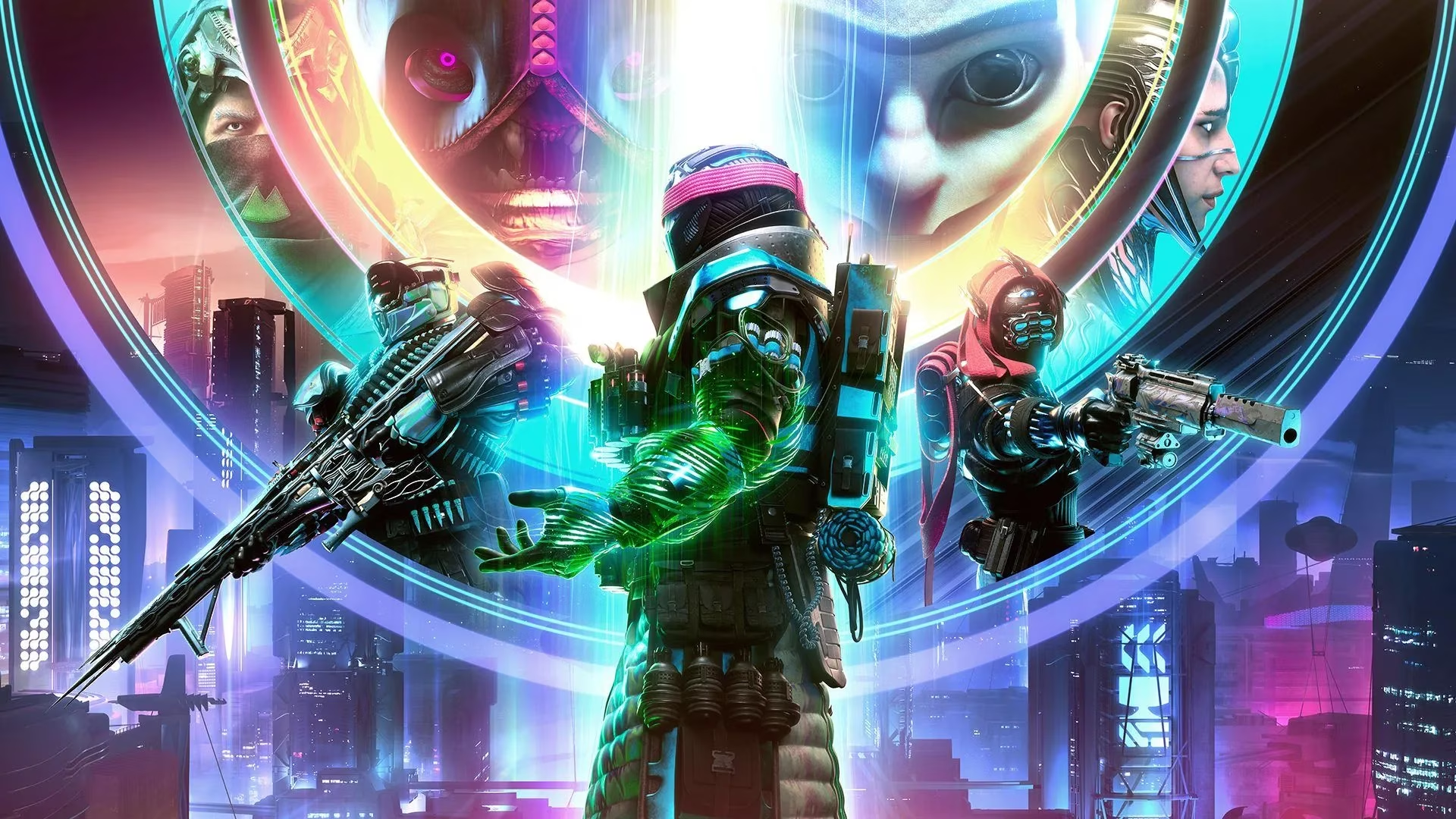
That aesthetic is a sore point all on its own. Neomuna is a garish, fluorescent playground that clashes violently with the intended tone of doom and isolation. We’re supposedly on the backfoot, cut off from the Vanguard, fighting a losing battle. Yet every street corner is drenched in pink and cyan, blaring a vibe more suited to a synthwave music video than a desperate last stand. It’s a fundamental disconnect—the art direction says “party,” while the script says “apocalypse.” This tonal whiplash hollowed out any sense of place, making the city feel like a cheap backdrop rather than a living, breathing frontline.
Worse still, the entire cast of heavy hitters basically sat this one out. After the opening cutscene, Zavala, Ikora, and the rest of the gang pull down the window shutters of their ship and vanish until the very last cinematic. They literally wait it out. When they finally resurface, it’s only to summon you back to the Tower for a collective moan about how rubbish everything has gone. This isn’t just lazy writing—it’s a baffling waste. Ikora, a character who once threatened to annihilate entire species when the Traveler was threatened, now chills on mute while the universe implodes. The lack of emotional weight and consequence made the world-building feel paper-thin. Neomuna was supposed to be a desperate new front; instead it felt like nobody really gave a damn.
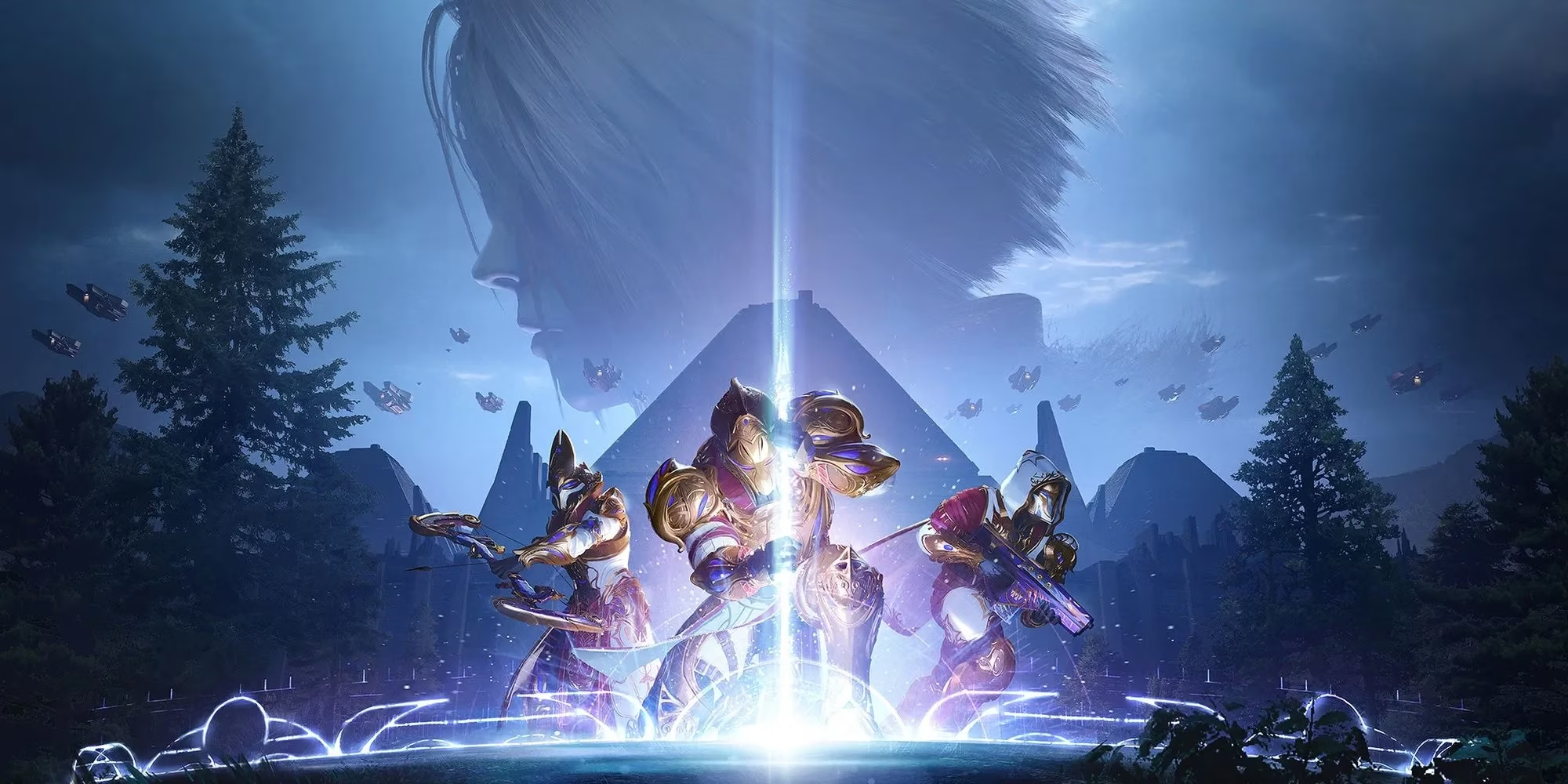
For many, the dream was a modern spin on Halo 3: ODST. That classic Bungie joint thrived on loneliness and vulnerability. You were a silent rookie, wandering the rain-soaked streets of New Mombasa, piecing together what happened while feeling utterly overwhelmed. There were no superhuman abilities or grand speeches—just survival. Lightfall had all the ingredients to replicate that magic. Imagine Neomuna as a haunting, melancholic ruin, its citizens missing, the air thick with dread. Instead, we got a squeaky-clean playground with perplexed Vex just vibing in the background, and a plot so disjointed it made you wonder if half the script was left on the cutting room floor.
What stings most is that Bungie can do so much more. Even in 2026, we’ve seen flashes of brilliance—The Final Shape managed to tie up the Light and Darkness saga with genuine emotion and respect for its characters. But Lightfall stands as a glaring misstep, a reminder that raw potential means nothing without context and soul. The combat and Strand abilities were undeniably fun, but when the story around them is a jumbled, undercooked mess, it’s like being handed a gourmet steak on a rubbish bin lid. The expansion could have said so much more by saying far less—by embracing silence, loss, and the quiet desperation ODST nailed. Instead, it chose loud, confused spectacle.
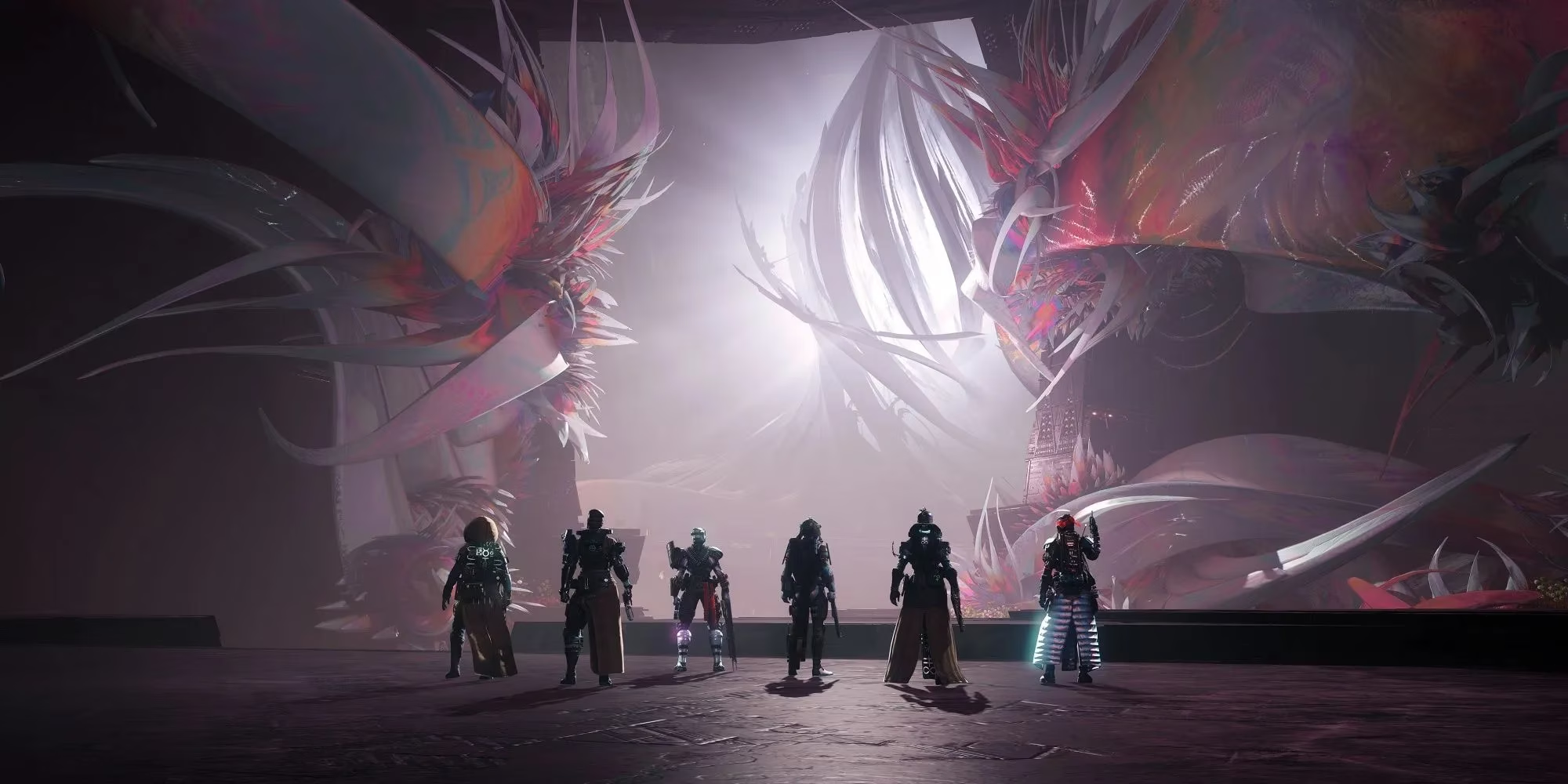
It’s hard to shake the feeling that Lightfall was a victim of its own ambition, or perhaps a pivot gone wrong. Some leaks and whispers even suggest major narrative rewrites late in development—sod’s law that it would end up feeling like two different expansions stitched together with Strand grapple points. Regardless, the result was a campaign that left players with more questions than answers, and a world that felt emptier than ever. The long wait for resolution turned into a long sigh.
Even today, as new Guardians run through the Lightfall content to catch up, the community’s verdict remains brutal. It’s the expansion we begrudgingly replay for the loot, not the story. And while Bungie has done a commendable job patching up the emotional arc with subsequent seasons, the stain of that fumbled ‘Infinity War’ moment hasn’t faded. Lightfall teaches a tough lesson: you can build a shiny new city, pack it with cool abilities, and craft a galaxy-threatening villain, but if your characters don’t care—and if the player isn’t given a reason to care—then it’s all just noise. Glorious, fluorescent, forgettable noise.