The Best Post-Game Journeys That Still Captivate Players in 2026
From Halo: Reach's Lone Wolf to Dragon's Dogma's twisted post-game, these titles prove the real adventure begins after the credits roll.
It was a drizzly February evening in 2026, and Sam\u2014a gamer who\u2019d seen more title screens than he cared to count\u2014slouched back in his chair as the credits of a modern epic scrolled past. The story had been gripping, the world beautifully brutal, but now it was just... over. A void opened up where the characters used to live. Yet as he flicked through his backlog, a grin tugged at the corner of his mouth. Some games, he knew, refuse to end. They\u2019re the ones that tuck extra adventures into their pockets, whisper \u201cpsst\u201d after the hero\u2019s journey is done, and invite you to stay a while longer. Sam had a list of those old favorites\u2014titles that, even years after their release, still know how to make a player feel that the real magic begins only when the main quest finishes. Let\u2019s follow him as he dusts off those memories.
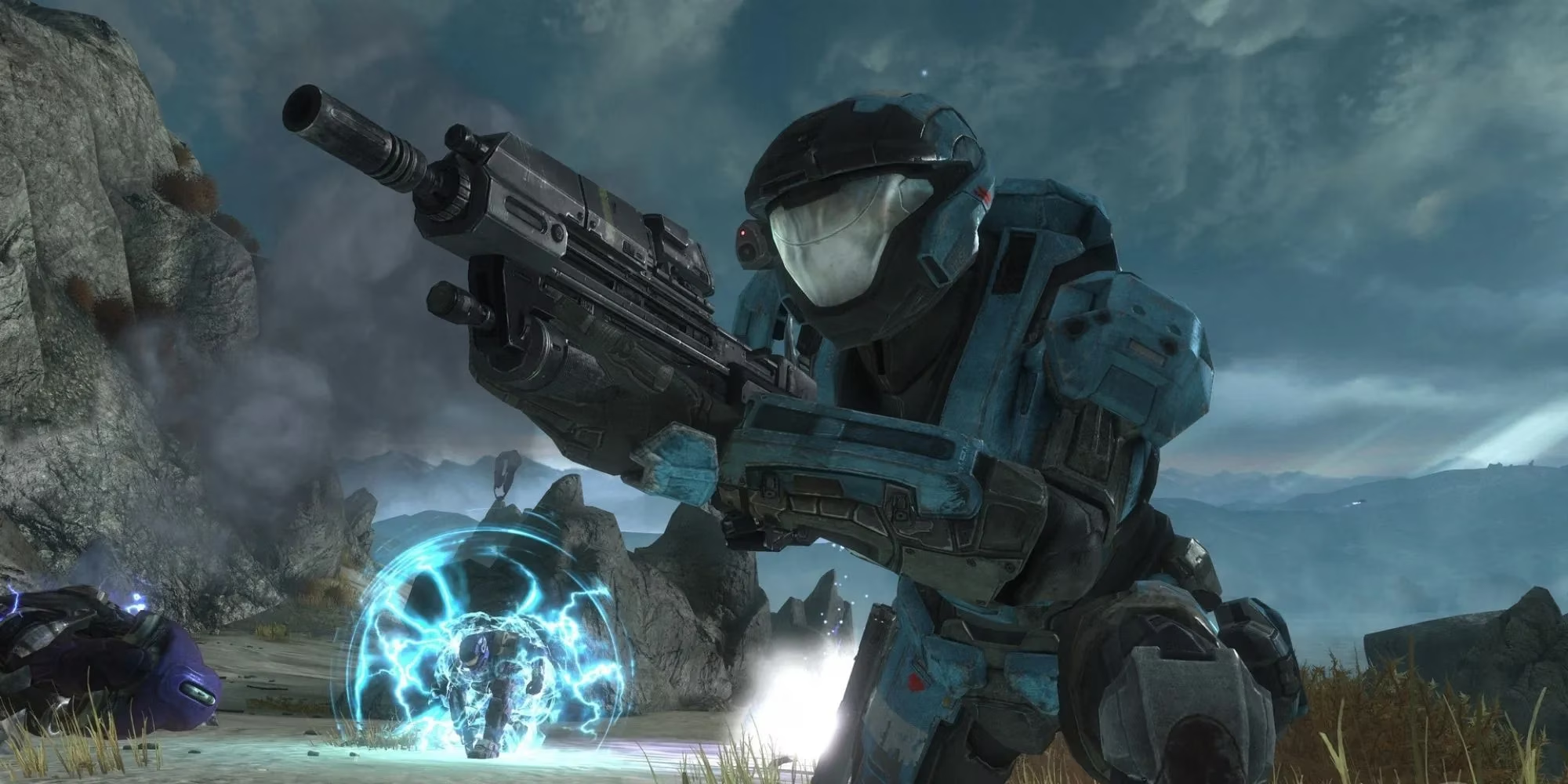
Halo: Reach didn\u2019t just show you its epilogue; it shoved you right into the middle of it. Most games reward you with a cutscene. Reach gave you Lone Wolf. Sam still remembered the first time the mission started\u2014no briefing, no objective marker that made sense. Just a dusty wasteland, a cracked visor, and waves of Covenant pouring over the ridge. The game wasn\u2019t asking him to win. It was asking him to survive for as long as his battered Spartan could stand. \u201cTalk about a gut-punch,\u201d Sam muttered every time he thought about it. That mission doesn\u2019t just wrap up a story; it makes you feel the cost of victory in a way no cutscene ever could. Years later, it\u2019s still a benchmark for post-credit content that means something.
Some games, though, take a quieter approach. Dragon\u2019s Dogma waited until you thought the world was saved, then flipped everything on its head. The sky turned a bruised, unsettling shade, and familiar meadows became populated with monstrous new forms. Sam remembered how he\u2019d nearly jumped out of his seat the first time he wandered back into Gran Soren and found the square eerily different. Let\u2019s be real\u2014the base game had its moments of tedium, but the post-game was where the world truly exhaled and showed its teeth. Loot tables reshuffled, enemies that once bullied him now trembled, and the landscape itself seemed to breathe with a second, darker life. It was the same map, but twisted just enough to make exploring it feel dangerous all over again. No other RPG has dared to be so generous with its \u201cafterparty.\u201d
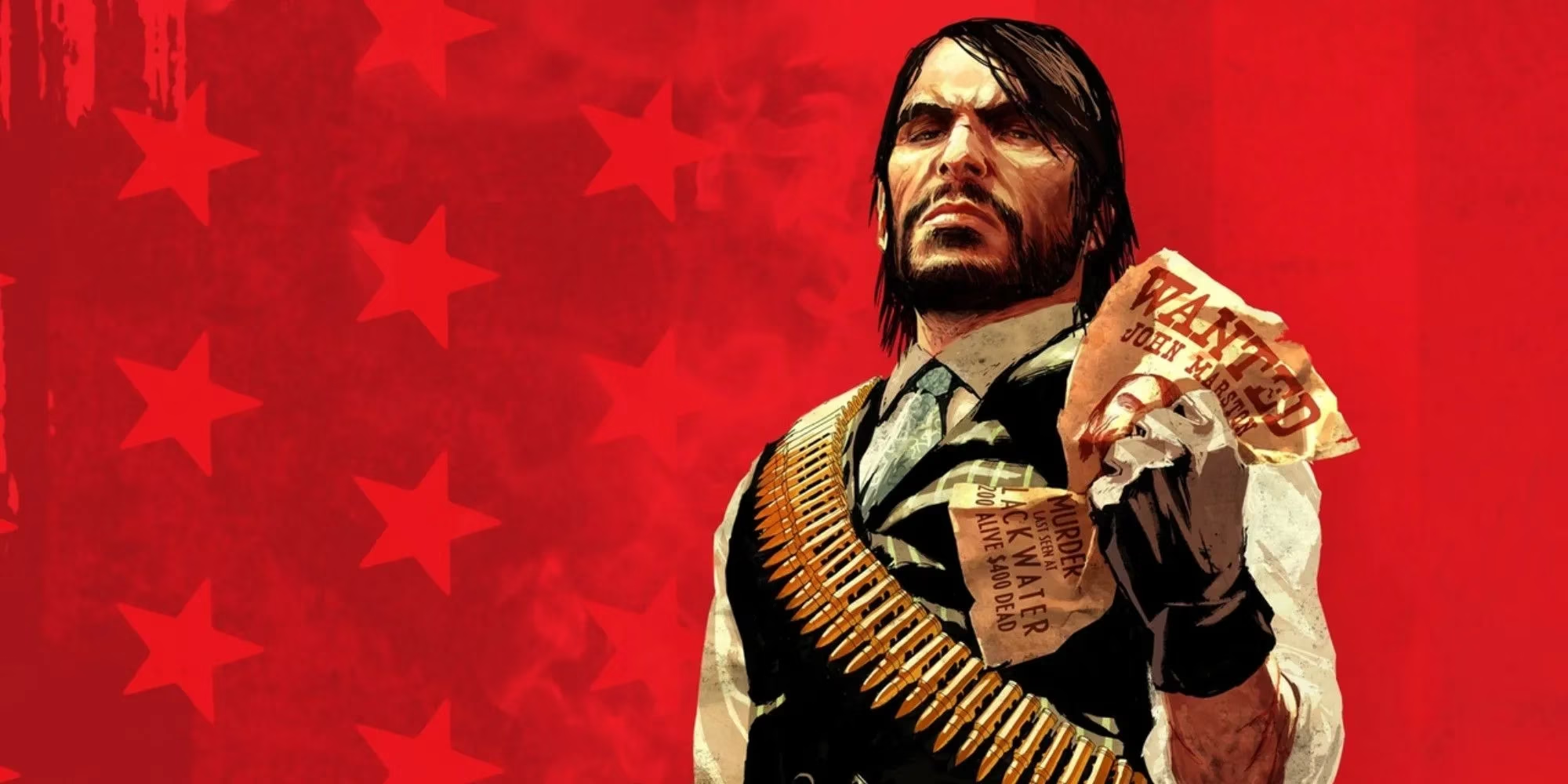
Then there\u2019s the open plains of New Austin, where a grieving son picked up a scattergun and set out for justice. Red Dead Redemption ends in one of the most devastatingly quiet tragedies in gaming\u2014a father cut down in a hail of government bullets, buying his family precious seconds. Where most narratives would roll credits, Red Dead handed the reins to Jack Marston. Sam could still feel the heavy silence of that first ride as Jack, the weight of a dead man\u2019s hat on his head. The revenge mission wasn\u2019t triumphant; it was slow, methodical, and achingly personal. It was the kind of post-game story that doesn\u2019t just give you more to do\u2014it completes an emotional arc you didn\u2019t realize needed closing. \u201cYou know what I mean?\u201d he\u2019d say to anyone who\u2019d listen. \u201cIt\u2019s the quiet revenge that stays with you.\u201d
Its prequel, Red Dead Redemption 2, stretched the concept even further. Even in 2026, players are still stumbling across small gravestones hidden among wildflowers, or running into strangers whose lives Arthur Morgan touched. Sam found himself returning to the epilogue farm not out of obligation, but because the world felt lived-in. The game didn\u2019t just dump a checklist of tasks; it wove quiet discoveries into the fabric of the frontier. Guns that only appear after the final chapter, the slow rebuilding of a broken home, the way an old acquaintance recognizes you not as Arthur, but as the man who carries his legacy\u2014all of it adds up to a goodbye that stretches for as long as you need it to.
Dark Souls 2 approached the idea of \u201cmore\u201d with a cackle and a handful of red phantoms. Sam had been one of the many who grumbled about some of its design choices, but he had to tip his controller to its New Game Plus. While other Souls titles simply scaled numbers, Dark Souls 2 genuinely rearranged the furniture. New enemy placements turned familiar corridors into panic rooms. Bosses gained extra phases or unexpected adds that forced you to relearn fights you\u2019d memorized. And then there were the invaders\u2014phantoms that mimicked real players, keeping you on edge long after you thought the zone was safe. It was the kind of mean-spirited creativity that kept Sam muttering \u201cjust one more try\u201d deep into the night. NG+ wasn\u2019t a victory lap; it was a second, meaner dance with a game that refused to let its secrets go easy.
From grim fantasy to bubblegum chaos, Borderlands 2 perfected the art of the endless grind. Bazillions of guns, the trailers bragged, and Sam believed them after a few dozen hours. But then the game winked and offered True Vault Hunter Mode. Then Ultimate. Then the Overpowered tiers that made even the hardiest Vault Hunters sweat. Each jump in difficulty was like the game saying, You think you\u2019re done? How cute. It became a running joke in the community: you never really finish Borderlands 2; you just take longer breaks between loot explosions. And with seasonal DLCs and side campaigns that could have been standalone releases, Sam knows why this looter-shooter still boasts a loyal playerbase nearly a decade and a half later.
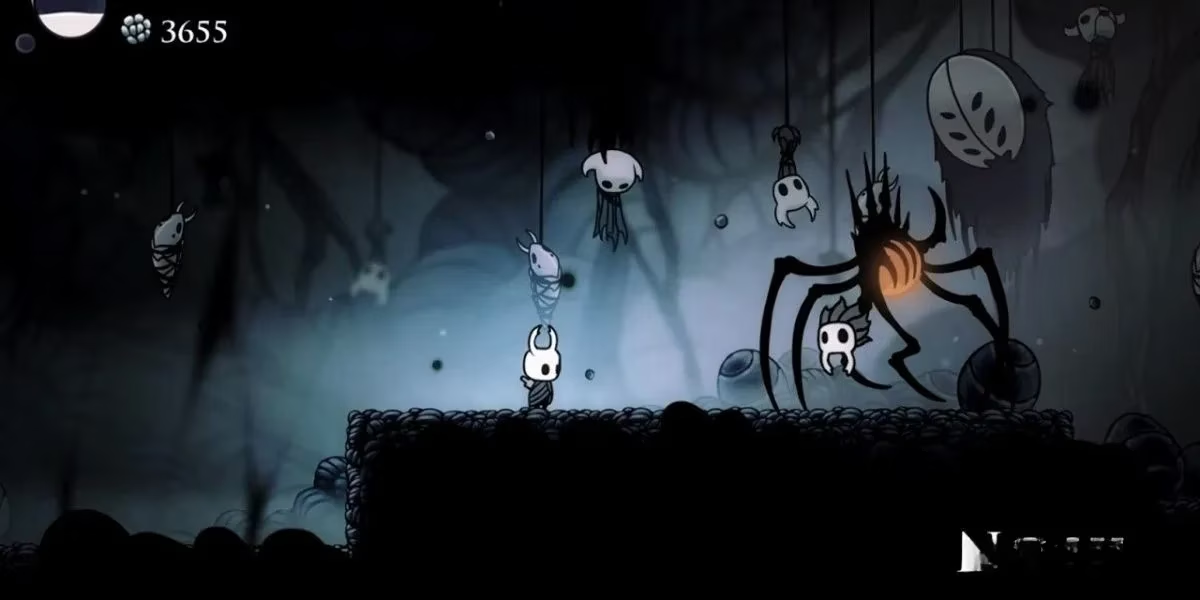
Not every post-game is about bigger numbers and rarer drops, though. Hollow Knight hides its best horrors behind delicate tasks. Sam recalled the Delicate Flower quest\u2014an infuriating pilgrimage across a map filled with spikes and vengeflies, all while cradling a bloom that shattered at the slightest touch. It was nonsense. It was brilliant. And it sat alongside entire secret zones like the White Palace, a gauntlet of buzzsaw corridors that demanded pixel-perfect platforming. The Colosseum of Fools\u2014lord, the Colosseum\u2014tested every ounce of nail-and-spell mastery the game had instilled. There was no grand narrative reason to chase these goals, just the satisfaction of a map fully charted and a charm collection complete. Sometimes, he mused, that\u2019s more than enough.
And then there\u2019s the live-service titan that\u2019s been running a marathon since 2017. Destiny 2 is, by nature, one enormous post-game. Its campaign is almost a tutorial for the sprawling constellation of Strikes, Crucible matches, Gambit invasions, Dungeons, and Raids that await. By 2026, the game has accumulated so many systems that even veterans like Sam sometimes blink at the Director screen in awe. But that\u2019s the beauty of it: finishing a campaign is simply the point where the world opens its arms and says, Okay, Guardian. Now let\u2019s get to work. The weekly resets, the buildcrafting, the \u201cjust one more Nightfall\u201d mantra\u2014it\u2019s a universe that keeps expanding, always dangling one more exotic quest just when Sam thinks he\u2019s finally caught up.
Looking back as he booted up one of those old favorites, Sam realized that the best post-game content doesn\u2019t just pad a runtime. It respects the time you\u2019ve already given, then offers a hand and asks if you\u2019d like to walk a little further. These games\u2014some over a decade old\u2014have taught an industry that endings don\u2019t have to be finish lines. They can be invitations. And in 2026, with so many titles vying for attention, that lingering invitation feels more valuable than ever.