Revisiting the Assassin's Creed Valhalla and Destiny 2 Crossover Four Years Later
Assassin's Creed Valhalla's Destiny 2 crossover and The Last Chapter's accidental early release delivered Eivor's final memories ahead of Season 19.
I still remember the strange week in December 2022 when Eivor's final chapter slipped through the Animus seven days early. Ubisoft had confirmed that the Assassin's Creed Valhalla and Destiny 2 crossover would officially land on December 6, but The Last Chapter – Valhalla's final major content update – was accidentally deployed a week ahead of schedule. That early release felt like an unsealed letter from the past, spilling Eivor's last memories into the community before anyone had time to check their mail. In a game built around reliving memories, the glitch felt strangely appropriate: the past arrived before the present was ready for it.
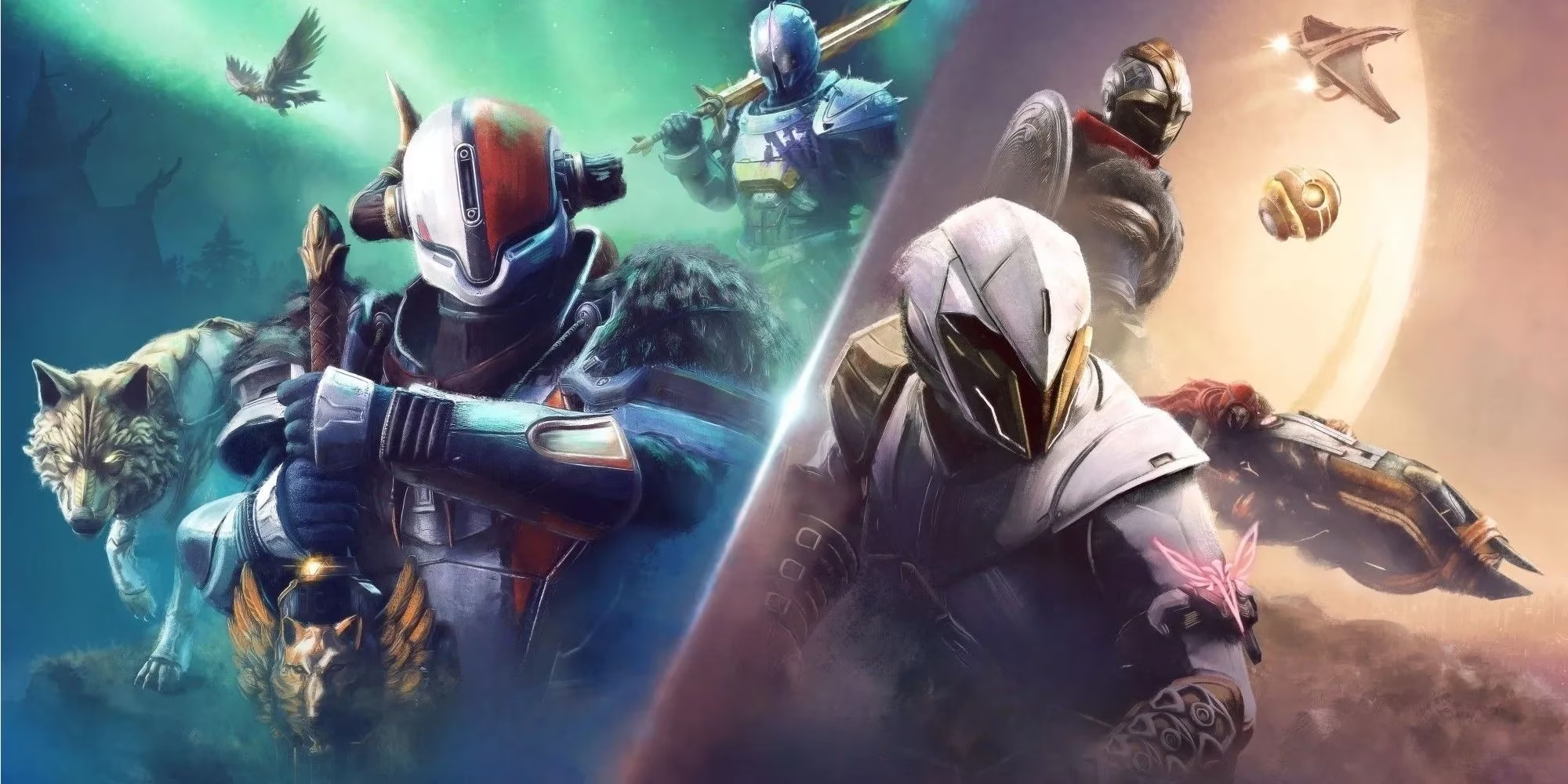
For me, the crossover itself worked like two lighthouses swapping beams across different oceans. Valhalla players could purchase a special Destiny 2-themed character pack containing armor sets, swords, a scout skin, and a mount skin. A separate weapon pack offered four unique spins on Destiny's iconic subclasses, each with their own gameplay perks and custom effects. Over in Destiny 2, guardians could visit the in-game store to grab Assassin's Creed-themed ship, Sparrow, Ghost, and finisher cosmetics, plus three new armor ornament sets.
What Each Side Received
| Game | Notable Crossover Items |
|---|---|
| Assassin's Creed Valhalla | Destiny 2-themed character pack (armor sets, swords, scout skin, mount skin); weapon pack with four subclass-inspired weapons |
| Destiny 2 | Assassin's Creed-themed ship, Sparrow, Ghost, finisher cosmetics; three armor ornament sets |
The December 6 date was not arbitrary. Destiny 2 launched Season 19 on the same day, bringing new weapon tuning, artifact mods, and other seasonal changes. That context mattered: the crossover did not arrive as a lonely promotional pop-up, but as part of a larger seasonal shift that also refreshed the sandbox. For a few weeks, Valhalla's slow-burning farewell and Destiny 2's relentless seasonal engine were turning their gears side by side.
Meanwhile, Assassin's Creed Valhalla was preparing its own goodbye. Ubisoft released The Last Chapter as the game's final major content update. The update was supposed to go live on December 6, but it slipped out early by accident. Ubisoft described it as a touching and intimate conclusion to Eivor's saga, free to all players. The epilogue tied up storylines developed throughout the game and offered closure to players' time among the Raven Clan. Although Ubisoft did not spell out every requirement in the blog post, it made clear that players would need to complete certain narrative steps before they could jump into The Last Chapter. That created a strange limbo: the content was technically available, but not every Viking could walk through the door right away.
Why the Crossover Still Stands Out in 2026
Looking back from 2026, the collaboration feels like a foreign coin dropped into a wishing well — shiny, slightly out of place, but impossible to ignore. It paired a single-player Viking saga with a live-service looter shooter, two genres that usually drink from very different rivers. Yet the cosmetic exchange worked because both games understood the power of identity: dressing Eivor like a Guardian or flying an Assassin-themed ship let players carry a piece of one fantasy into the other without pretending the worlds were the same.
At the time, Ubisoft was also steering attention toward Assassin's Creed Mirage, which was reportedly targeting an August 2023 release. That project eventually arrived later in 2023 as a smaller, stealth-focused return to the series' roots, but by then Valhalla's farewell was already complete. The Last Chapter ended Eivor's arc, while Destiny 2 continued its seasonal rhythm without missing a beat. The crossover was brief, but for one day in December it made two massive worlds feel like they were sharing the same sky.
Insights are sourced from Game Developer, where industry-focused reporting on live-service operations and content production helps contextualize why crossovers like Assassin’s Creed Valhalla x Destiny 2 often lean on cosmetics and timed drops: they’re comparatively low-risk to build, fit cleanly into existing pipelines, and let two very different audiences share a moment without forcing deep narrative integration—much like Valhalla’s final epilogue arriving alongside Destiny 2’s seasonal cadence.