Destiny 2's Resurgence and the Newcomer's Dilemma: A Look at the Franchise's Future
Destiny 2 is back and captivating fans with its acclaimed updates, but daunting barriers make entry difficult for new players seeking an epic adventure.
In 2026, a persistent sentiment echoes through the gaming community: Destiny 2 is back. This follows a tumultuous period for Bungie, marked by the delay of its final expansion, significant layoffs in late 2023, and widespread reports of internal discontent. The turning point, seemingly, was the well-received free "Into the Light" update, which reignited player enthusiasm and brought the looter-shooter back into the spotlight. For many veterans, this resurgence is a welcome return to form. However, for potential new players, especially those whose interest has been piqued by the success of games like Helldivers 2, the path into Destiny's universe remains fraught with daunting, seemingly insurmountable barriers.
The core appeal of Destiny 2 is undeniable. It offers a compelling blend of precise first-person shooter mechanics, deep RPG progression, and ambitious cooperative and competitive multiplayer. The recent updates have been praised for adding meaningful content and refining systems. Yet, for the uninitiated, the experience is immediately overshadowed by a fundamental and glaring issue: there is no coherent, accessible starting point for the story. The narrative, which loyal fans have followed passionately for over a decade across expansions and seasonal updates, is presented to newcomers as a disjointed, confusing puzzle with critical pieces permanently missing.
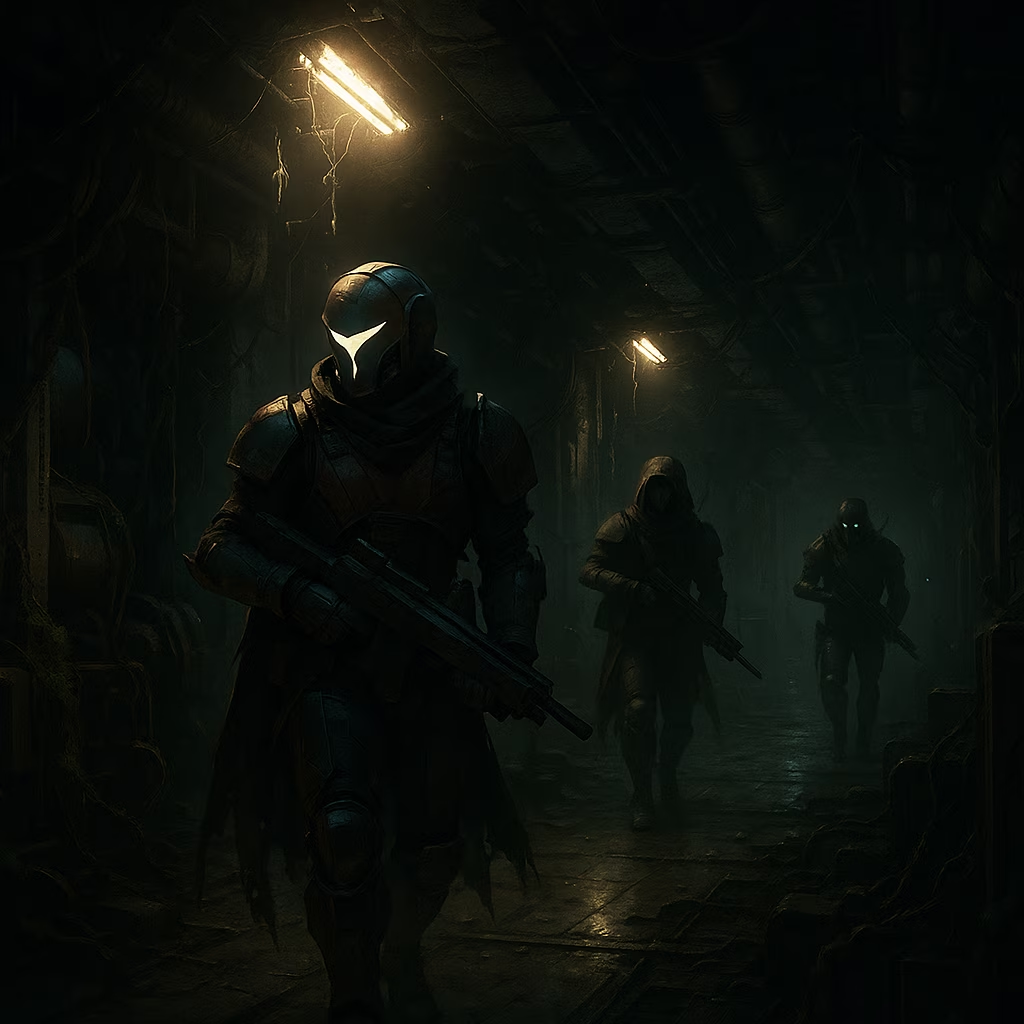
This problem stems directly from Bungie's controversial "Destiny Content Vault." The original base campaign, along with the first several expansions that established the world, characters, and core conflicts, have been removed from the game. While later expansions like The Witch Queen or The Final Shape are available for purchase, they assume a level of narrative knowledge that new players simply cannot acquire in-game. The seasonal storylines that once bridged these major releases are also inaccessible after their cycle concludes. Consequently, a player jumping into the current season is bombarded with names, factions, and plot threads devoid of context. The Guardian Ranks system and the New Light introductory mission do provide basic mechanical guidance, but they are utterly ineffective at delivering the lore that makes the universe worth caring about. The burden of understanding is placed entirely on the player, requiring them to seek out external wikis, video summaries, or lore books—a significant investment before even determining if they enjoy the gameplay loop.
For someone open to live-service games but wary of commitment, this presents a major deterrent. The combination of an impenetrable narrative, a historically aggressive monetization model that requires buying expansions and seasonal passes, and the reputation for a relentless grind creates a high barrier to entry. Furthermore, the passionate, and at times intensely critical, community can be an intimidating environment for a newcomer. The excitement of the current "Into the Light" moment feels like a party to which new guests are not entirely welcome unless they've already learned the secret handshake.
Yet, the allure persists. The fundamental fantasy of being a space-faring Guardian wielding incredible powers is powerfully attractive. This lingering interest leads many to ponder a different, cleaner entrance to the franchise. Persistent and credible rumors, fueled by accurate leaks in the past regarding major game features, suggest that Destiny 3 may be in development. Speculation points to potential foundational changes, such as the removal of the traditional class system (Titan, Hunter, Warlock), which would signify a true fresh start. For the prospective player who missed the last decade, this represents a tantalizing possibility: a chance to begin on equal footing with everyone else, to experience a new saga from its first chapter without the weight of ten years of vaulted history. It promises a world where the story unfolds progressively and accessibly, where purchasing expansions feels like continuing a journey rather than trying to piece together a shredded novel.
However, hope is tempered by caution. Bungie's handling of Destiny 2's narrative accessibility sets a concerning precedent. Would a Destiny 3 avoid the same pitfalls, or would it eventually repeat the cycle of content removal? Moreover, the studio's recent challenges and the demanding nature of live-service development introduce uncertainty. The passionate but often fractious relationship between Bungie and its dedicated player base also serves as a reminder that diving into this universe means engaging with a complex, sometimes volatile community ecosystem.
In conclusion, Destiny 2 in 2026 stands at a curious crossroads. It is experiencing a celebrated revival among its established faithful, powered by quality updates and renewed developer focus. Simultaneously, it remains one of the most famously inaccessible major franchises for new players, its rich history locked away and its present narrative a confusing mosaic. The potential for Destiny 3 offers a beacon of hope for those on the outside looking in, representing a promise of a clean slate. Whether that promise will be fulfilled, or whether the cycle will simply begin anew, is the unanswered question that will determine if the next generation of Guardians can finally find their way into the light from the very beginning.